I've mentioned Doc giving me a bunch of books and I don't update this thing as often as I should, so let's go through them.
The first one is the Springsteen bio. Bruce Springsteen and the Promise of Rock and Roll by Marc Dolan. Apparently Doc tries to read a biography once every semester, so I'm not entirely sure if he really is a big Springsteen fan, or if it just kept coming up because this just happened to be the biography he was reading at the time. But anyway. I still have about a hundred pages left, but I've already read 300, so I think I can talk about it. Everything up to Born to Run and just after was pretty interesting, but shortly after that it started to get into politics and I kinda lost interest. I'll finish it, but it's a long book and I needed a break from it.
I'll admit I don't know how to approach this one. I don't usually pick up biographies; they just don't interest me that much. There's too much boring stuff in the middle of living life XD Reading this one probably would have been easier/ more entertaining if I was familiar with Springsteen's discography, but as it stands, it wasn't a bad read at all for someone who doesn't really consider themselves a fan. The author goes into some technical details on the songs, which went way over my head (I made a 1 on the AP Music Theory exam - I am completely lost when it comes to analyzing music), but other parts like poking around at the lyrics were interesting.
Onward: Bento's Sketchbook by John Berger. Doc gave me this one because he was reminded of my own notebooks with the sketches and doodles (he told me off not long ago for not drawing in my notebooks more XD). This one isn't exactly a collection of shorts, but it's not quite a linear story either. It is very much like one of my notebooks - a collection of thoughts and sketches.
The philosophy of Spinoza, including lots of quotes from his work, is spaced throughout though I didn't get that much out of those segments. Most of the thoughts revolve around drawing and where the impulse to create comes from. He often presents a sketch and then the story behind the sketch - where he was, who/ what he was drawing, why he chose to draw that particular thing or person. I thought the approach was pretty neat. There's something clinical in the way he writes it all out, but not boring or sterile. He writes about the world very much as a philosopher might, in clean, rational lines. It's probably one of those things you either like or hate, but I enjoyed the book.
Office Girl by Joe Meno. I'd actually thought about picking this up once - Doc has recommended a different Meno to me in the past, though this one was the only one I could find in the bookstore. I'll probably give his work another shot if I ever run into one of his books again.
Office Girl focuses on two hipster teens, Jack and Odile, and takes place just before the new millennium. I like his writing style a lot, which made up for the fact that I really didn't like the characters. Jack grew on me, but Odile - well, she comes off as one of those people who likes to be spastic and random for the sake of "being unique." Which I think was the point, but I'm not quite sure. I can't tell if the book is satirizing their lifestyle or celebrating it. Or both I guess.
The story begins with Odile who has worked 17 jobs in the last few years and probably has some sort of complex because she sleep with anyone so that they'll like her. That's not analysis on my part, she literally says that later in the book. We follow her around for a while and then the story jumps over to Jack for some time. He is going through a divorce in all but name and is working on a soundscape project. He rides around the city on his bike with a tape recorder and captures the sounds of whatever he finds interesting (this includes the usual city sounds and also things like a balloon flying away and a green glove lying in the snow).
About halfway through the two meet while working in the same office that sells elevator music. They do random things together. Though it's more Odile doing and Jack letting himself get dragged along because he really wants to sleep with her.
I don't know - I did like the book, I just can't stand these two, or at least Odile. There are lots of great lines and images and I like the fragmented thing he does when he switches to a new scene and Jack at least does seem to grow as a person even if he doesn't get any sort of happiness for it or whatever. I'm just not sure what to make of this one. I like the sense of longing and desperation and the hunt for meaning - he's captured the feeling well, but doesn't bother to provide any of the meaning they're looking for. I really like that Jack lays it out for Odile when he reaches the same conclusion about her that I did.
Eh. Maybe I'll like a different one of his books, one without a main character that acts like a proto-Lady Gaga.
Which brings me to Stay Awake by Don Chaon. Probably my favorite of the stuff he's given me. I really don't like horror stories, but this short story collection isn't quite horror. Much of it is almost disturbingly normal. They feel like ghost stories, even if they aren't. None of the stories are connected, but there are recurring themes and images like missing fingers, abused and abandoned children, paranoia, suicide, loss; it's a psychological study in a lot of ways.
For example; a guy named O'Sullivan is coming home from college. His degree hasn't gotten him anywhere. He hitches a ride with his brother who drives a semi-truck. Lots of awkward silence ensues because they don't really have anything to talk about. They keep seeing the same motorcyclist along the road during the drive. All of this is fragmented and told in past tense - the story begins after the two have just hit a deer and get out to make sure everything it okay. It's a perfectly normal story and there really shouldn't be anything creepy about it, but the atmosphere he creates is very tense. Or maybe it's just because it was late in the book and I knew something had to be coming (I'm not sure I interpreted the ending right, but if I did, then yeah, that was pretty messed up).
That was probably the most normal story in the book actually. It may have been the only one where I didn't get a feel for something vaguely supernatural lurking in the background. One story is about a father whose son keeps having night terrors, another about a guy who keeps finding random notes (like blown in the wind random), another about a guy who takes a boy away from his meth-addicted mother but realizes he can't handle that responsibility. I think there were close to ten stories in all.
It's a pretty dark collection is what I'm saying here. Very Gothic sorts of stories; I might even venture to call them Grotesque. Nothing you'd really care to read before bedtime.
And that's what I've been reading the last few months = )
Showing posts with label books. Show all posts
Showing posts with label books. Show all posts
Saturday, May 11, 2013

Saturday, March 30, 2013
Suspicious
I think Doc may be trying to turn me into a Springsteen fan.

It's only a hunch, but I really can't shake it.
Also, this isn't out on loan; he gave it to me. I feel bad because it's a rather expensive book, unless he got it for less than the price on the dust jacket. I'm about 150 pages in.
Honestly, it's been so long since anyone gave me anything just for the hell of it. Even if he is hoping that I'll learn a thing or two about research writing by paging though it =P

It's only a hunch, but I really can't shake it.
Also, this isn't out on loan; he gave it to me. I feel bad because it's a rather expensive book, unless he got it for less than the price on the dust jacket. I'm about 150 pages in.
Honestly, it's been so long since anyone gave me anything just for the hell of it. Even if he is hoping that I'll learn a thing or two about research writing by paging though it =P
Tuesday, November 27, 2012
School Stressors
Note to Self: Registration begins December 19th. I'm planning to sign up for Fiction Writing II, Pattern Recognition, Advanced World Literature, American Literature, American Dream, and of course an Independent Study. 18 hours. I'm gonna get racked across the coals this Spring.
Scrambling to get all of my final papers finished; I've got two big ones due very soon. I'm more worried about my Calvino paper as I've not even started. Currently reading my fourth book by the author and I'm thinking about doing a comparison paper between his various novels. He's very much an author of place and setting - I adore his descriptions. I love the way he sets a mood through imagery. I'd like to make that the focus of my essay, but I'm not sure I can stretch that into ten pages.
Anyway, I'm reading Difficult Loves, which is a book of short stories. I feel like I may be reading it too quickly - I think there's a lot of deeper meaning that's getting skimmed over in my haste to get it read. There was a lovely story about a hidden garden, and I just know I missed something near the end. A lot of them are kinda like that. It's probably going to be one of those things I get a lot more of later on down the line when I'm not responsible for so many other things.
Scrambling to get all of my final papers finished; I've got two big ones due very soon. I'm more worried about my Calvino paper as I've not even started. Currently reading my fourth book by the author and I'm thinking about doing a comparison paper between his various novels. He's very much an author of place and setting - I adore his descriptions. I love the way he sets a mood through imagery. I'd like to make that the focus of my essay, but I'm not sure I can stretch that into ten pages.
Anyway, I'm reading Difficult Loves, which is a book of short stories. I feel like I may be reading it too quickly - I think there's a lot of deeper meaning that's getting skimmed over in my haste to get it read. There was a lovely story about a hidden garden, and I just know I missed something near the end. A lot of them are kinda like that. It's probably going to be one of those things I get a lot more of later on down the line when I'm not responsible for so many other things.
Saturday, September 15, 2012
Suddenly, a Knock on the Door
Etgar Keret is my new favorite author and I'll never again doubt any book recommendations Minnick sends my way.
I've been reading and writing flash fiction for years, but never realized there were people who did it professionally. I've seen authors write flash fic of course, but it was usually a one off thing on the side, for a magazine or something. This is exactly the kind of thing I've always wanted to find in a brick-and-mortar bookstore.
I picked up Suddenly a Knock on the Door about a week ago and read the entire thing in a few hours. Partly because I hated to put it down, but also because it isn't very long - I think the longest story in there was maybe five or six pages, if that. I was kinda reminded of Harris Burdick stories; you just kinda go with a lot of the logic and don't really question it. Of course there's a magic gumball machine buried under a stone in that guy's childhood backyard and he found out about it through a dream. Why wouldn't there be? It almost borders on magical realism at times. I really enjoyed the nonchalant tone that even the strangest events were treated with.
It's kinda neat to realize there are people out there doing what I've been doing and being successful at it. I didn't realize there was an audience for flash fiction outside of the Internet.
I've been reading and writing flash fiction for years, but never realized there were people who did it professionally. I've seen authors write flash fic of course, but it was usually a one off thing on the side, for a magazine or something. This is exactly the kind of thing I've always wanted to find in a brick-and-mortar bookstore.
I picked up Suddenly a Knock on the Door about a week ago and read the entire thing in a few hours. Partly because I hated to put it down, but also because it isn't very long - I think the longest story in there was maybe five or six pages, if that. I was kinda reminded of Harris Burdick stories; you just kinda go with a lot of the logic and don't really question it. Of course there's a magic gumball machine buried under a stone in that guy's childhood backyard and he found out about it through a dream. Why wouldn't there be? It almost borders on magical realism at times. I really enjoyed the nonchalant tone that even the strangest events were treated with.
It's kinda neat to realize there are people out there doing what I've been doing and being successful at it. I didn't realize there was an audience for flash fiction outside of the Internet.
Tuesday, July 24, 2012
Interesting.
I've been getting into the habit of paying a visit to the English department at least once a week. Nothing against my family or anything, but I need to converse with people IRL that I am not related to and who are not a cat on occasion. Getting away from the baby for a little while is just a bonus.
I'm writing away in the lounge area for a little while (working on something for Flash Fic Month today), and I usually stay until someone kicks me out. That responsibility typically falls to Minnick as he's almost always the last person to leave the department. On the way out, we chat about writing and he offers to start an exchange of sorts.
I think I managed to impress him with that character sketch.
I'm used to giving and returning critique and comments online, and I'm used to swapping writing with my group at the library, but this already feels different. I've never gone one-on-one before, and certainly not with someone who knows a hella lot more than I do - with the other stuff, everyone has been on more or less equal ground. It seems like most of the people I'm in contact with are primarily self-taught, the only real difference being in raw talent and number of years had to refine it.
I'm not really sure what I'm getting myself into, but I think it will be interesting XD
In other news, I have helped start a book club on dA. I'm probably going to move my Passages there and I'll be writing a book review every month. Not sure what I'm getting myself into there either, but again, interesting.
I'm writing away in the lounge area for a little while (working on something for Flash Fic Month today), and I usually stay until someone kicks me out. That responsibility typically falls to Minnick as he's almost always the last person to leave the department. On the way out, we chat about writing and he offers to start an exchange of sorts.
I think I managed to impress him with that character sketch.
I'm used to giving and returning critique and comments online, and I'm used to swapping writing with my group at the library, but this already feels different. I've never gone one-on-one before, and certainly not with someone who knows a hella lot more than I do - with the other stuff, everyone has been on more or less equal ground. It seems like most of the people I'm in contact with are primarily self-taught, the only real difference being in raw talent and number of years had to refine it.
I'm not really sure what I'm getting myself into, but I think it will be interesting XD
In other news, I have helped start a book club on dA. I'm probably going to move my Passages there and I'll be writing a book review every month. Not sure what I'm getting myself into there either, but again, interesting.
Thursday, July 19, 2012
Three Books in One Week Makes Me Feel Accomplished
Been catching up on my reading lately. I did manage to track down a copy of the last Artemis Fowl, so there's that. Minnick sent me the book list for next semester's Adolescent Literature course, and I've already made my way through one of them. And I even managed to sneak in a third book inbetween. Also, spoilers.
 I've been following Artemis Fowl since near the beginning; I think I read the first book around the time the second came out; I was about twelve or thirteen. Even when they were being obnoxious about the environmental messages, I could look over it because everything else was so good - Eoin Coulfer has some sharp writing that leaves me in stitches. The dialogue more or less runs on snark and I just never get tired of that. The plot can get rather messy, especially in some of the later books, but never so much that I lost track of what was happening.
The last installment doesn't disappoint at all; I think I liked it better than The Atlantis Complex in fact. Entertaining as Orion was, I'm glad he's gone. All the major characters are back (well, that aren't dead anyway), and while I usually don't like it when an author introduces new ones this late in the game, it's well done here; Myles and Beckett are fun and Foaly's previously, briefly-mentioned wife is fleshed out and brought out to play, even if it is only for a single scene (and good Lord she is awesome).
The romantic sub-plot doesn't get resolved, overshadowed by something that would be quite a spoiler if I said much more, so I won't. But I do like that he let things lie they way they did; last-minute hook-ups just bother me. It's as good as saying yeah, I was putting off their happiness together for the sake of drama. That kind of thing always feels like a disservice to the characters if you ask me (but no one did, so I get to rant about it here instead).
Anyway, while the series as a whole does have its weak points, I can't really think of anything negative to say about The Last Guardian. I think he ended the books in a pretty dignified manner and even managed to do some clever retconning that made genuine sense and cast a few previous plot details in a different slant of light. The characters have grown, but not changed and I like that a lot; Artemis made the shift into more or less full Hero mode, but kept the bite he's had from the very first book. I can't really ask for more than that.
Second book this week; a collection of short stories based on Harris Burdick drawings. If you've never heard of Burdick, he's the short version: he made 14 odd drawings with a title and a caption. He had stories to go with them, and he promised the man he left the drawings with that he would return tomorrow with the stories. He was never heard from again.
 So basically the drawings are now kinda like prompts from which people can build their own stories. The collection I was browsing had some rather big names in children's literature within; Kate DiCamillo, Linda Sue Park, Chris Van Allisburg, Stephen King, Louis Sachar, Gregory Macguire - I recognized at least 3/4ths of the names. I don't think I disliked a single story, though some did stand out more than others.
I particularly enjoyed the one by Cory Doctorow; it had a soft scientific thread running though it (not enough to make the story sci-fi, but enough that I have to comment on its presence) and I really enjoyed that about it. I can't remember who wrote the other one I really liked, but it was about a little girl whose father and older brothers were trying to unravel a difficult formula. One day while she's outside playing, she saved two caterpillars from a bird and it turns out they're sentient. And they know how to solve the formula. And I won't say how it ends because the ending is the reason I remember it so well.
Other stories include a house that turns out to be a rocketship, a short with a A.I. meets The Truman Show-esque plot, a floating nun, a harp-playing frog, a book you can't stop reading, and an author whose creations come to life during a housefire (maybe). This is one of the reasons I enjoy collections like this - I like the diversity, yet there's still something there to connect them. They don't feel out of place with one another. Several of them were like reading a novelization of a Twilight Zone episode, which is never a bad thing :P
Third book of the week: The Evolution of Calpurnia Tate. Something for Adolescent Literature.
First of all, Calpurnia is an awesome name. Now that that's out of the way...
He's assigning some longer books this semester. I'm glad I asked for that book list now. This is the second-longest one, the longest being The Extraordinary Education of Nicholas Benedict (by an author who happens to live in my city, and who I'm sure Minnick knows personally). I did read all of Calpurnia in a day, but I'm also a fast reader (and reading while I've nothing else to do); not everyone will be so on top of it :P
 It takes place just before 1900 - in fact the last chapter ends on the New Year. If you know anything about history, you know this is a time of significant change, what with electricity and the telephone and all that jazz. The particular focus here though is on science and the influence of Darwin. Darwin isn't even that much of a presence come to that; more like a catalyst in the background. Things do kick off more or less when Calpurnia decides to track down a copy of The Origin of Species, but after getting her hands on one it's rarely mentioned. Most of the focus is elsewhere.
So we have our main character, Calpurnia. She lives on a wealthy farm in Texas, the middle of seven children, six of which are boys. You may already see where this is going. If not, then let us just say Calpurnia and her mother do not see eye to eye. However, that plot thread is background noise until we get closer to the end of the book where it really does rear its head. But before we get there -
Early on she becomes friends with her Grandfather, who loves to experiment and study the world. This is where much of the plot is; Calpurnia helping and learning from her Grandfather. It's rather difficult to summarize because the book, while linear, is kinda episodic. One chapter picks up one of the plot threads, and the next one is about a different one. Then the first plot thread comes back some chapters later. It's not hard to follow or anything, it's just difficult to say what the book is about as a whole when it works that way XD Though is I were to give a one-sentence summary, it would probably go "an almost-teenage girl living in a time of significant change aspires to be a Naturalist under the tutelage of her Grandfather to the annoyance of her mother."
Anyway, plot threads. We have the possibility that Calpurnia and Grandfather have discovered a new species of plant, Grandfather's brewing experiments, Calpurnia's interactions with various members of her family (her mother and her oldest brother in particular), various school/ etiquette lessons, and technological change. Again, it's not a bad thing at all - sometimes I was eager to get back to a particular plot thread, but the variety was interesting and it's not as complicated as I'm making it sound. It has a sense of life to it in that way; life doesn't come with a single linear plot as it were XD
I really enjoyed the ending quite a lot, much for the same reason I enjoyed the ending to Artemis Fowl; it doesn't really resolve anything, but it's a good place to stop. The mother-daughter conflict isn't settled. Calpurnia's future is still uncertain. She's not going to be an adult for a long while yet. Grandfather never makes a good bottle of wine. It just ends and I like that.
So, long post is long. But I've been wanting to chat about my books and it's probably better I did it now before I read anything else.

The last installment doesn't disappoint at all; I think I liked it better than The Atlantis Complex in fact. Entertaining as Orion was, I'm glad he's gone. All the major characters are back (well, that aren't dead anyway), and while I usually don't like it when an author introduces new ones this late in the game, it's well done here; Myles and Beckett are fun and Foaly's previously, briefly-mentioned wife is fleshed out and brought out to play, even if it is only for a single scene (and good Lord she is awesome).
The romantic sub-plot doesn't get resolved, overshadowed by something that would be quite a spoiler if I said much more, so I won't. But I do like that he let things lie they way they did; last-minute hook-ups just bother me. It's as good as saying yeah, I was putting off their happiness together for the sake of drama. That kind of thing always feels like a disservice to the characters if you ask me (but no one did, so I get to rant about it here instead).
Anyway, while the series as a whole does have its weak points, I can't really think of anything negative to say about The Last Guardian. I think he ended the books in a pretty dignified manner and even managed to do some clever retconning that made genuine sense and cast a few previous plot details in a different slant of light. The characters have grown, but not changed and I like that a lot; Artemis made the shift into more or less full Hero mode, but kept the bite he's had from the very first book. I can't really ask for more than that.
Second book this week; a collection of short stories based on Harris Burdick drawings. If you've never heard of Burdick, he's the short version: he made 14 odd drawings with a title and a caption. He had stories to go with them, and he promised the man he left the drawings with that he would return tomorrow with the stories. He was never heard from again.

I particularly enjoyed the one by Cory Doctorow; it had a soft scientific thread running though it (not enough to make the story sci-fi, but enough that I have to comment on its presence) and I really enjoyed that about it. I can't remember who wrote the other one I really liked, but it was about a little girl whose father and older brothers were trying to unravel a difficult formula. One day while she's outside playing, she saved two caterpillars from a bird and it turns out they're sentient. And they know how to solve the formula. And I won't say how it ends because the ending is the reason I remember it so well.
Other stories include a house that turns out to be a rocketship, a short with a A.I. meets The Truman Show-esque plot, a floating nun, a harp-playing frog, a book you can't stop reading, and an author whose creations come to life during a housefire (maybe). This is one of the reasons I enjoy collections like this - I like the diversity, yet there's still something there to connect them. They don't feel out of place with one another. Several of them were like reading a novelization of a Twilight Zone episode, which is never a bad thing :P
Third book of the week: The Evolution of Calpurnia Tate. Something for Adolescent Literature.
First of all, Calpurnia is an awesome name. Now that that's out of the way...
He's assigning some longer books this semester. I'm glad I asked for that book list now. This is the second-longest one, the longest being The Extraordinary Education of Nicholas Benedict (by an author who happens to live in my city, and who I'm sure Minnick knows personally). I did read all of Calpurnia in a day, but I'm also a fast reader (and reading while I've nothing else to do); not everyone will be so on top of it :P

So we have our main character, Calpurnia. She lives on a wealthy farm in Texas, the middle of seven children, six of which are boys. You may already see where this is going. If not, then let us just say Calpurnia and her mother do not see eye to eye. However, that plot thread is background noise until we get closer to the end of the book where it really does rear its head. But before we get there -
Early on she becomes friends with her Grandfather, who loves to experiment and study the world. This is where much of the plot is; Calpurnia helping and learning from her Grandfather. It's rather difficult to summarize because the book, while linear, is kinda episodic. One chapter picks up one of the plot threads, and the next one is about a different one. Then the first plot thread comes back some chapters later. It's not hard to follow or anything, it's just difficult to say what the book is about as a whole when it works that way XD Though is I were to give a one-sentence summary, it would probably go "an almost-teenage girl living in a time of significant change aspires to be a Naturalist under the tutelage of her Grandfather to the annoyance of her mother."
Anyway, plot threads. We have the possibility that Calpurnia and Grandfather have discovered a new species of plant, Grandfather's brewing experiments, Calpurnia's interactions with various members of her family (her mother and her oldest brother in particular), various school/ etiquette lessons, and technological change. Again, it's not a bad thing at all - sometimes I was eager to get back to a particular plot thread, but the variety was interesting and it's not as complicated as I'm making it sound. It has a sense of life to it in that way; life doesn't come with a single linear plot as it were XD
I really enjoyed the ending quite a lot, much for the same reason I enjoyed the ending to Artemis Fowl; it doesn't really resolve anything, but it's a good place to stop. The mother-daughter conflict isn't settled. Calpurnia's future is still uncertain. She's not going to be an adult for a long while yet. Grandfather never makes a good bottle of wine. It just ends and I like that.
So, long post is long. But I've been wanting to chat about my books and it's probably better I did it now before I read anything else.
Sunday, April 22, 2012
The House on Mango Street
I've seen this book around for years, but only read it today for Adolescent Literature tomorrow. It's not at all what I was expecting.
The narrative is not sequential at all, or if it is there's no indication. There aren't so much chapters as vignettes tied together by virtue of being narrated by the same character with a very slice of life tone. In short, it's exactly the kind of thing I would write were I so inclined to publish a book.
The kind of thing that is - I really enjoyed the format and the semi-lyrical style of the novels. However, the best slice of life stories infuse the everyday with magic, something this book didn't really do for me. It has its moments of course, and to be fair the everyday magic moments weren't really the point of it all; just a personal preference. I don't want to sell it short because it is quite good, but I'm measuring it up against a totally different set of standards.
I might post more after class discussion tomorrow.
The narrative is not sequential at all, or if it is there's no indication. There aren't so much chapters as vignettes tied together by virtue of being narrated by the same character with a very slice of life tone. In short, it's exactly the kind of thing I would write were I so inclined to publish a book.
The kind of thing that is - I really enjoyed the format and the semi-lyrical style of the novels. However, the best slice of life stories infuse the everyday with magic, something this book didn't really do for me. It has its moments of course, and to be fair the everyday magic moments weren't really the point of it all; just a personal preference. I don't want to sell it short because it is quite good, but I'm measuring it up against a totally different set of standards.
I might post more after class discussion tomorrow.
Monday, February 20, 2012
Winter Town
by Stephen Emond
Another strike off my book list. And that's pretty much the only reason I kept with it; so I could take it off the list. Read the entire thing in one day. Between classes. That's how simple a read it was.
Summary: Evan - Leave it to Beaver family, upcoming Valedictorian, spineless. Lucy - broken home, comes back to her hometown and Evan for Christmas, comes back one year with a nose ring and black hair.
There are your protaganists - cardboard as they come.
And that would have been fine; tropes are tropes because they work. Yet here they do not work in this instance because the writing is terrible and the characters have no character. Good lord, could this book have been any more monotone? You can have a peaceful, easy atmosphere without being boring. The first chapter is the sort of thing I'd feature as a DLD, maybe, but is not what I want from a professionally published piece. Allow me to open the book at random and type the first paragraph I see:
Lucy came home to a cluttered living room that seemed to be missing a floor. You know, those things for walking on. (Interruption; yes, the narrative actually said this.) In place of the floor were a million tiny fragments of computer guts. In the center of them was Lucy's father, with the shell of the computer opened like a book. Only the living room was lit, and sparsely. The house was barely decorated for the holidays. There was one small Christmas tree that fit on a tabletop Lucy tiptoed through the computer parts to the couch, which she fell onto heavily, flat on her face. She moaned to herself a moment.
Riveting, isn't it? I can just hear the end-stops screaming for relief. All the details are like this; tell, tell, tell, cardinal sin of description.
I wanted to enjoy this book - the summary sounded cliche, but sweet; something nice and familiar for a few hours. But it's just plain old boring. Evan doesn't do anything and Lucy is content to be a bitch to the one person that goes out of the way to be kind to her. Am I getting older, or are teen books just getting worse? Or do I just keep picking up bad adolescent literature of late?
I'm leaning towards that third option because I still really identify and enjoy "teen" books, even if good ones are coming few and far between of late. Though given that my book list is nearly 50 pieces long, there's got to be something on it for me to enjoy in the near future.
In short: don't waste your time. The cover is the best thing about this book.
Another strike off my book list. And that's pretty much the only reason I kept with it; so I could take it off the list. Read the entire thing in one day. Between classes. That's how simple a read it was.
Summary: Evan - Leave it to Beaver family, upcoming Valedictorian, spineless. Lucy - broken home, comes back to her hometown and Evan for Christmas, comes back one year with a nose ring and black hair.
There are your protaganists - cardboard as they come.
And that would have been fine; tropes are tropes because they work. Yet here they do not work in this instance because the writing is terrible and the characters have no character. Good lord, could this book have been any more monotone? You can have a peaceful, easy atmosphere without being boring. The first chapter is the sort of thing I'd feature as a DLD, maybe, but is not what I want from a professionally published piece. Allow me to open the book at random and type the first paragraph I see:
Lucy came home to a cluttered living room that seemed to be missing a floor. You know, those things for walking on. (Interruption; yes, the narrative actually said this.) In place of the floor were a million tiny fragments of computer guts. In the center of them was Lucy's father, with the shell of the computer opened like a book. Only the living room was lit, and sparsely. The house was barely decorated for the holidays. There was one small Christmas tree that fit on a tabletop Lucy tiptoed through the computer parts to the couch, which she fell onto heavily, flat on her face. She moaned to herself a moment.
Riveting, isn't it? I can just hear the end-stops screaming for relief. All the details are like this; tell, tell, tell, cardinal sin of description.
I wanted to enjoy this book - the summary sounded cliche, but sweet; something nice and familiar for a few hours. But it's just plain old boring. Evan doesn't do anything and Lucy is content to be a bitch to the one person that goes out of the way to be kind to her. Am I getting older, or are teen books just getting worse? Or do I just keep picking up bad adolescent literature of late?
I'm leaning towards that third option because I still really identify and enjoy "teen" books, even if good ones are coming few and far between of late. Though given that my book list is nearly 50 pieces long, there's got to be something on it for me to enjoy in the near future.
In short: don't waste your time. The cover is the best thing about this book.
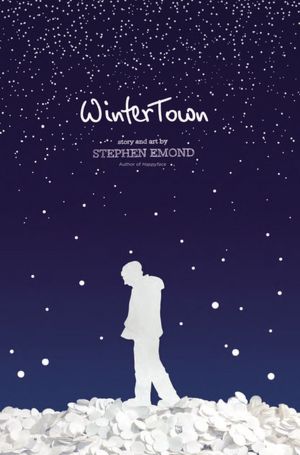 |
| No really, just look at this gorgeous cover <3 |
Saturday, February 18, 2012
Out of the Dust
Book Three for Adolescent Literature. Yay.
First impression: Newbery Medal on the cover; someone dies.
Later: Yep. Called it.
But really, if you get a chance to read this book, do so. It's a verse novel, so the story is told through poetry, which is an interesting effect to say the least. There were quite a few poems I genuinely enjoyed.
The story is narrated by teenaged Billie Jo during the Dust Bowl of the 30's. The cover is about as boring as they come, which was what probably kept me picking it up before, but is probably a good thing - I remember this book being in my elementary school library. If I'd read it then, it would have messed me up. It's not that it's paticularly horrific or anything, but some of the passages just hurt to read. Eeeeugh.
That said, there are also several beautiful passages, more than I would have expected from a story about the Dust Bowl (hell, more than I would expect from a story that takes place in Oklahoma XD). The sections concerning infants and birth were especially poignant and the single poem about World War I stick in my mind more than others.
I've read Karen Hesse before, so I did know a little of what I was getting into; judging from this book and The Music of Dolphins, she seems to enjoy "experimental" styles - while this one was pure poetry, the latter was semi-poetic but for a different reason; the narrator is speaking mostly through Translation Convention. The prose is intersting to me because as the narrator learns more about the human world and how to speak "properly," the level of difficulty increases - from about a first grade level complete with larger print to about a fifth grade level as the text shrinks - and decreases again with her longing for home until finally being released to the sea where Translation Convention once again takes full effect.
But that's neither here nor there. More than anything, I think I'm left wondering why this book was in my elementary school - granted it is for younger readers, but fifth grade seems a little too young. While heavy on atmosphere and character, I think much of it would go right over the head of a ten year old. I could see it being one of those books you read, forget about, and then come back to years later with a fresh understanding of what was really going on within.
Not to say younger readers won't appreciate it at all of course - I think grasping the plot and meaning is easy enough, but some of the undertones, of distance between parent and child and the sort-of relationship with another character for example, that aren't quite as explicit might be lost.
When all's said and done, historical fiction isn't really my forte - loved the book anyway.
First impression: Newbery Medal on the cover; someone dies.
Later: Yep. Called it.
But really, if you get a chance to read this book, do so. It's a verse novel, so the story is told through poetry, which is an interesting effect to say the least. There were quite a few poems I genuinely enjoyed.
The story is narrated by teenaged Billie Jo during the Dust Bowl of the 30's. The cover is about as boring as they come, which was what probably kept me picking it up before, but is probably a good thing - I remember this book being in my elementary school library. If I'd read it then, it would have messed me up. It's not that it's paticularly horrific or anything, but some of the passages just hurt to read. Eeeeugh.
That said, there are also several beautiful passages, more than I would have expected from a story about the Dust Bowl (hell, more than I would expect from a story that takes place in Oklahoma XD). The sections concerning infants and birth were especially poignant and the single poem about World War I stick in my mind more than others.
I've read Karen Hesse before, so I did know a little of what I was getting into; judging from this book and The Music of Dolphins, she seems to enjoy "experimental" styles - while this one was pure poetry, the latter was semi-poetic but for a different reason; the narrator is speaking mostly through Translation Convention. The prose is intersting to me because as the narrator learns more about the human world and how to speak "properly," the level of difficulty increases - from about a first grade level complete with larger print to about a fifth grade level as the text shrinks - and decreases again with her longing for home until finally being released to the sea where Translation Convention once again takes full effect.
But that's neither here nor there. More than anything, I think I'm left wondering why this book was in my elementary school - granted it is for younger readers, but fifth grade seems a little too young. While heavy on atmosphere and character, I think much of it would go right over the head of a ten year old. I could see it being one of those books you read, forget about, and then come back to years later with a fresh understanding of what was really going on within.
Not to say younger readers won't appreciate it at all of course - I think grasping the plot and meaning is easy enough, but some of the undertones, of distance between parent and child and the sort-of relationship with another character for example, that aren't quite as explicit might be lost.
When all's said and done, historical fiction isn't really my forte - loved the book anyway.
Monday, January 2, 2012
Snuff
I feel terrible saying it, but I was disappointed by the lastest from Pratchett. I'm already forgetting much of the plot, and I only finished the book a few days ago. I didn't find many memorable lines this go around, nor did I find much humor - given that I consider "humorous" to be the defining characteristic of Pratchett's style, that's a pretty big miss for me. If you changed the character names, I wouldn't have known it was a Discworld novel.
It's not that it didn't have it's moments, but I honestly couldn't tell you what they were now. I can still remember, line for line, some of the best quotes from books like Mort that I read two years ago and have barely looked at since. I still read the book in two nights (typical for me and a Pratchett book), but I did feel like I was forcing myself a little out of some loyalty to Vimes, who gets some of the best books in the series. AND WHY WAS THERE NO DEATH CAMEO WHY DID THIS HAPPEN HOW COULD YOU.
There's also some confustion for me, which a friend will no doubt be able to clear if he ever gets on Skype again - goblins and orcs. Same thing? Different races? It's really not made that clear - in previous books we see one orc who has been raised up as not very orcish at all so I can't really draw a comparison. I recall from "Unseen Academicals" that they was some talk near the end of civilizing an entire race, though I can't remember if it was a reference to Nutt's culture or a seperate goblin culture. I also recall pastor Mightily Oats has some dealings with goblins and was the one that freed Nutt in the past. But I can't get around that I think that goblins and orcs were supposed to be different species.
But come to that, I don't really like that, if different, two new races have been introduced within three books. Dwarfs and trolls and werewolves and most of the other species have been given 40+ books to be fleshed out and developed as unique cultures. Goblins and orcs feel like caricatures in comparison. Nutt at least we got to see as a character; the entire point of his book was not letting others define him by what he is and developing a sense of worth despite what others think of his species. We don't really get a chance to see any of the goblins as characters in that way. (I'd say the one with the harp was probably the most well done, even if the power of music felt like such a huge ass pull.) We get an overview of their way of life, their religion is breifly discussed (in the first pages in fact) and forgotten for the rest of the book and bears no significance on the plot is except to make one Watch officer go insane for a little while. It doesn't help that by making the entire goblin species so... helpless? Self-hating? it makes them feel like a plot device instead of actual characters. We get it - racism, xenophobia = bad. There's no need to beat us over the head with it. Not that it stopped him other books, but at least he was funny (and occasionally subtle) while beating us over the head.
And I don't know if I'm reading way too much into it, but given how little subtlety was in this book maybe not; but was the goblin mothers eating their young thing supposed to be a metaphor for abortion? Because seriously, if that's what it was I think I lost a little bit of respect for Pratchett. Unless it was supposed to be a reference to "A Modest Proposal," in which case it was rather botched.
I do like the idea of Vimes having to stop a crime that isn't in fact a crime, having to choose between the lawful thing and the right thing, but I really do think it could have better written. That theme barely raises its head in the book, held down by the plot device that is the goblin race. Pratchett spends so much time on racism, a theme we've seen in pretty much every Watch book so far. I'll conceed Some Anvils Need to Be Dropped, but that anvil has been dropped at least five or six times in previous books. Better yet, those anvils actually merited thought - this time I felt like I was being talked down to.
I'd say the the Summoning Dark was the best part of the book, but it makes its presence known so few timesthat it practically doesn't count. I'd have loved to see that relationship expounded upon, but it looks like I'm going to have to dive back into FFN to get it. The relationship we do have between the two is ridiculosuly out of character - actually, a whole lot of things are out of character. What happened to the Vimes that was terriffied of losing his morality and sanity against this pseudo-demonic force in "Thud!"? The Vimes who would never depend on magic to solve a case now accepts said psudo-demonic thought-beings' witness testimony? The Vimes who hated being a nob now uses his aristocratic power shamelessly? The Vimes who was haunted with doubts and clung to the Law like a beacon has resolved all his doubts somewhere off-screen? This isn't Vimes. This isn't one of my favorite Discworld characters.
Similar thoughts for many of the others - Willikins is a thug. A very well dressed thug no doubt, but in "Jingo" for instance, he was still a gentleman's gentleman; his thuggish past only came into play during times of danger. Here, it's all tough guy, all the time. Sybil is awfully concerned with being prim and proper this go around, something she couldn't have cared less about a few books ago. What happened to the Sybil that raised dragons like a boss? Since when does she need her husband to tell everyone off for her? When did she go from "totally awesome supportive wife" to henpecking Vimes over every little thing?
Honestly, I do feel bad about saying the book is kindasortaokayit'sreallybadbyDiscworldstandards given what the author is dealing with. And I know for most authors it's difficult to maintain quality over a trilogy, nevermind however many Pratchett has churned out (what is it, like 45 books now?). I was really hoping the series was going to end on a high note, but if the books are going to continue on like this, perhaps it's time to quit while ahead. Of the Discworld books I've read, there are six I wouldn't but for my own collection. "Snuff" is one of them.
It's not that it didn't have it's moments, but I honestly couldn't tell you what they were now. I can still remember, line for line, some of the best quotes from books like Mort that I read two years ago and have barely looked at since. I still read the book in two nights (typical for me and a Pratchett book), but I did feel like I was forcing myself a little out of some loyalty to Vimes, who gets some of the best books in the series. AND WHY WAS THERE NO DEATH CAMEO WHY DID THIS HAPPEN HOW COULD YOU.
There's also some confustion for me, which a friend will no doubt be able to clear if he ever gets on Skype again - goblins and orcs. Same thing? Different races? It's really not made that clear - in previous books we see one orc who has been raised up as not very orcish at all so I can't really draw a comparison. I recall from "Unseen Academicals" that they was some talk near the end of civilizing an entire race, though I can't remember if it was a reference to Nutt's culture or a seperate goblin culture. I also recall pastor Mightily Oats has some dealings with goblins and was the one that freed Nutt in the past. But I can't get around that I think that goblins and orcs were supposed to be different species.
But come to that, I don't really like that, if different, two new races have been introduced within three books. Dwarfs and trolls and werewolves and most of the other species have been given 40+ books to be fleshed out and developed as unique cultures. Goblins and orcs feel like caricatures in comparison. Nutt at least we got to see as a character; the entire point of his book was not letting others define him by what he is and developing a sense of worth despite what others think of his species. We don't really get a chance to see any of the goblins as characters in that way. (I'd say the one with the harp was probably the most well done, even if the power of music felt like such a huge ass pull.) We get an overview of their way of life, their religion is breifly discussed (in the first pages in fact) and forgotten for the rest of the book and bears no significance on the plot is except to make one Watch officer go insane for a little while. It doesn't help that by making the entire goblin species so... helpless? Self-hating? it makes them feel like a plot device instead of actual characters. We get it - racism, xenophobia = bad. There's no need to beat us over the head with it. Not that it stopped him other books, but at least he was funny (and occasionally subtle) while beating us over the head.
And I don't know if I'm reading way too much into it, but given how little subtlety was in this book maybe not; but was the goblin mothers eating their young thing supposed to be a metaphor for abortion? Because seriously, if that's what it was I think I lost a little bit of respect for Pratchett. Unless it was supposed to be a reference to "A Modest Proposal," in which case it was rather botched.
I do like the idea of Vimes having to stop a crime that isn't in fact a crime, having to choose between the lawful thing and the right thing, but I really do think it could have better written. That theme barely raises its head in the book, held down by the plot device that is the goblin race. Pratchett spends so much time on racism, a theme we've seen in pretty much every Watch book so far. I'll conceed Some Anvils Need to Be Dropped, but that anvil has been dropped at least five or six times in previous books. Better yet, those anvils actually merited thought - this time I felt like I was being talked down to.
I'd say the the Summoning Dark was the best part of the book, but it makes its presence known so few timesthat it practically doesn't count. I'd have loved to see that relationship expounded upon, but it looks like I'm going to have to dive back into FFN to get it. The relationship we do have between the two is ridiculosuly out of character - actually, a whole lot of things are out of character. What happened to the Vimes that was terriffied of losing his morality and sanity against this pseudo-demonic force in "Thud!"? The Vimes who would never depend on magic to solve a case now accepts said psudo-demonic thought-beings' witness testimony? The Vimes who hated being a nob now uses his aristocratic power shamelessly? The Vimes who was haunted with doubts and clung to the Law like a beacon has resolved all his doubts somewhere off-screen? This isn't Vimes. This isn't one of my favorite Discworld characters.
Similar thoughts for many of the others - Willikins is a thug. A very well dressed thug no doubt, but in "Jingo" for instance, he was still a gentleman's gentleman; his thuggish past only came into play during times of danger. Here, it's all tough guy, all the time. Sybil is awfully concerned with being prim and proper this go around, something she couldn't have cared less about a few books ago. What happened to the Sybil that raised dragons like a boss? Since when does she need her husband to tell everyone off for her? When did she go from "totally awesome supportive wife" to henpecking Vimes over every little thing?
Honestly, I do feel bad about saying the book is kindasortaokayit'sreallybadbyDiscworldstandards given what the author is dealing with. And I know for most authors it's difficult to maintain quality over a trilogy, nevermind however many Pratchett has churned out (what is it, like 45 books now?). I was really hoping the series was going to end on a high note, but if the books are going to continue on like this, perhaps it's time to quit while ahead. Of the Discworld books I've read, there are six I wouldn't but for my own collection. "Snuff" is one of them.
Subscribe to:
Posts (Atom)